COAL CREEK SCHOLARS
PROJECT
Researching the convict miners who
died in the Knoxville
Iron and Coal Company (KICC) Mine
in the Wye Community
(View more photos at end of page)
LIBRARY STUDY
On Saturday, January 28, 2006, the Phillips siblings--Jacob, Cassie, and Jennifer, dug through Tennessee State Prison archives at Lawson-McGhee Library searching for information about Coal Creek’s convict miners. According to local history, when they died, the convicts were carried up the hillside above the mine and buried. Some have fieldstones marking their graves and others have no marker.

Coal Creek Scholars--
Jennifer, Jacob, and Cassie Phillips
at the Lawson McGhee Library
in Knoxville

Barry Thacker shows the scholars how
to operate the microfilm reader
FIELD STUDY
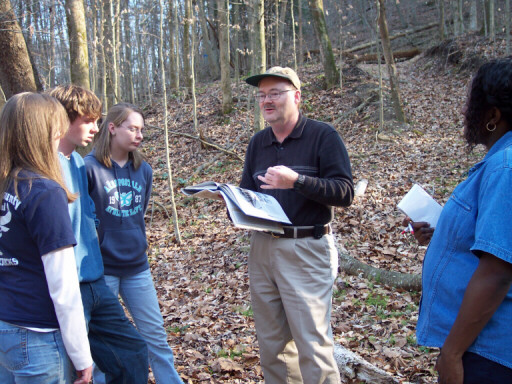
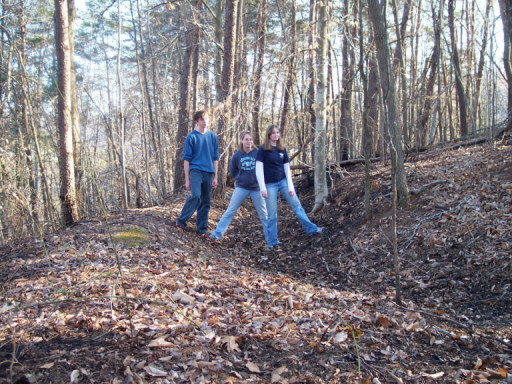
On March 29, 2006, Jacob, Cassie, and Jennifer explored the site around the abandoned KICC Mine and the hillside where the convict miners are buried. Sketches of the site, published by Harper’s Weekly magazine in 1892, were studied. They show the layout of the convict stockade and houses of the mine foremen, along with the proximity of Fort Anderson on Militia Hill on the ridge above the KICC Mine. The sketches also show that most of the trees from the KICC Mine up to Militia Hill had been cut during the war to reduce the chance of ambush by Coal Creek miners.
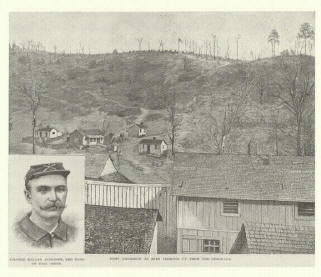
Fort Anderson on Militia Hill on ridge above the KICC Mine
site as seen from the convict stockade (Harper's Weekly, August 27, 1892)

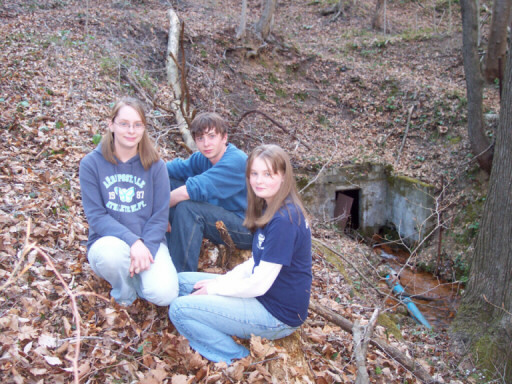
Jennifer, Jacob, and Cassie Phillips
above the abandoned KICC mine portal
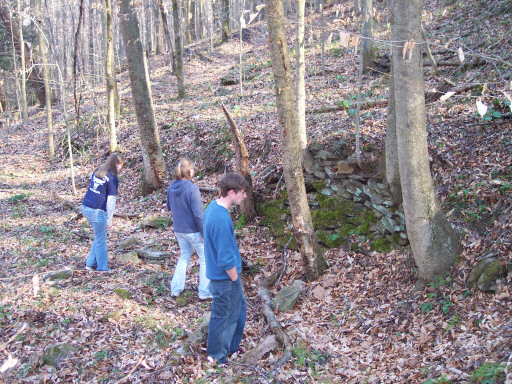
Level ground and remnants of those structures were examined, along with the mounds of waste shale that had been separated from the coal after it was mined. The early Welsh miners who came to Coal Creek after the Civil War started the mine, but were replaced by convict miners in 1877. Water discharging from the abandoned KICC Mine portal is a reminder of just one of the obstacles the miners faced in getting to the coal.
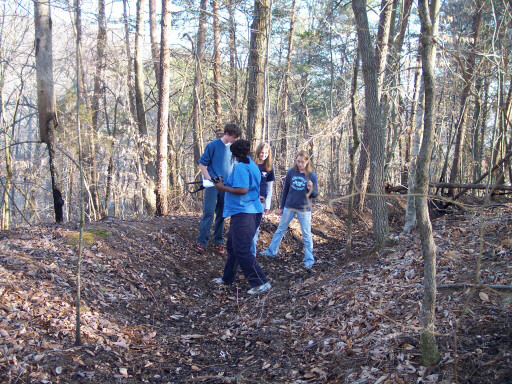
The hike up to Convict Miners Cemetery was strenuous carrying only your own weight. The trek illustrates the difficulty the convict miners must have faced when burying one of their own. After visiting the mine site, Jacob, Cassie, and Jennifer walked the trenches at Fort Anderson on Militia Hill that had been dug by the Tennessee Militia and convicts during the Coal Creek War.
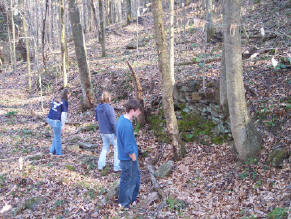
Remnants of a former structure
Writer Johanne Jean-Jacques from the Clinton Courier News accompanied us on the field study. Read Johanne's article published in the Courier at www.coalcreekaml.com/newsCour040206.htm
FUTURE PROJECT
Someday, we will erect a monument at Convict Miners Cemetery, similar to the monuments of the Fraterville and Cross Mountain miners. Thanks to the hard work of Jennifer, Cassie, and Jacob, now we know the names of the convict miners buried in the Wye Community.
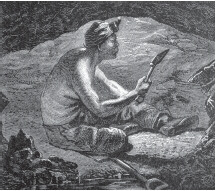
Convict miner at work from
"History of Tennessee" (Bluebook)
 Cassie transcribes convict
information
from pages
printed from microfilm
 Jacob uses magnifying glass
to
Jacob uses magnifying glass
to
read
some of the difficult
handwriting
from the
records of the 1800s
 Jennifer documents names
found on microfilm
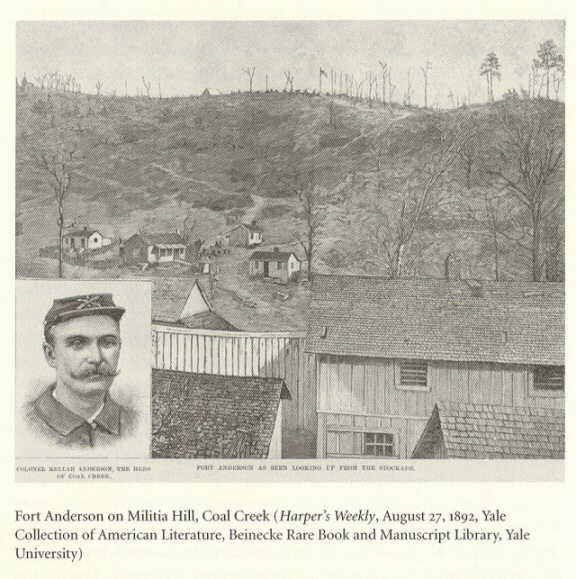 Fort Anderson on Militia Hill
as seen from
the KICC Mine Stockade
Fort Anderson on Militia Hill
as seen from
the KICC Mine Stockade
(Harper's Weekly, August 27, 1892)
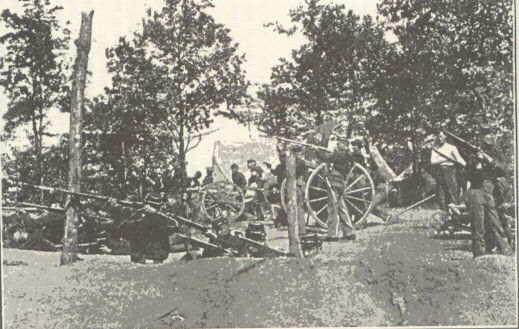 Tennessee
Militia firing cannons
Tennessee
Militia firing cannons
and Gatling guns from
Militia Hill
during the
Coal Creek
War
(From the Souvenir Booklet of Company "C")